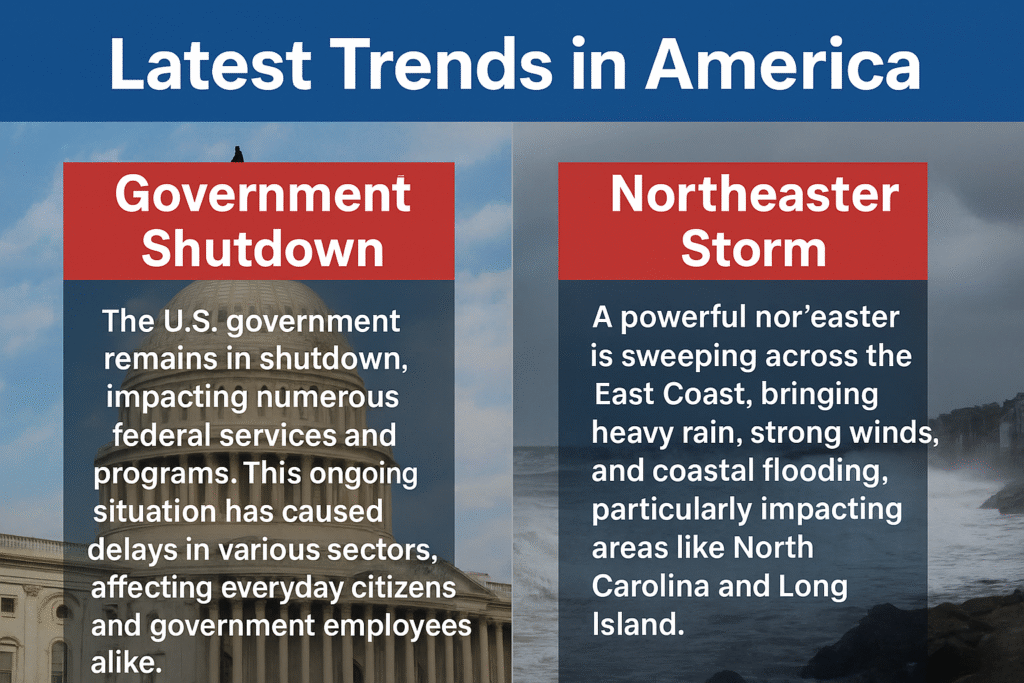
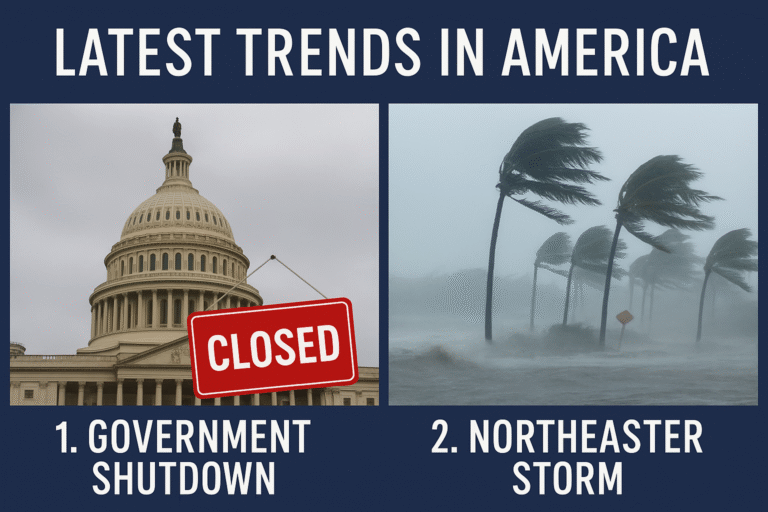
As the U.S. government shutdown continues, millions of Americans are feeling the ripple effects in their daily lives. The shutdown, now stretching beyond its second week, has disrupted essential federal services, delayed paychecks for government workers, and halted a range of public programs — from environmental protection projects to housing assistance.
Causes Behind the Shutdown
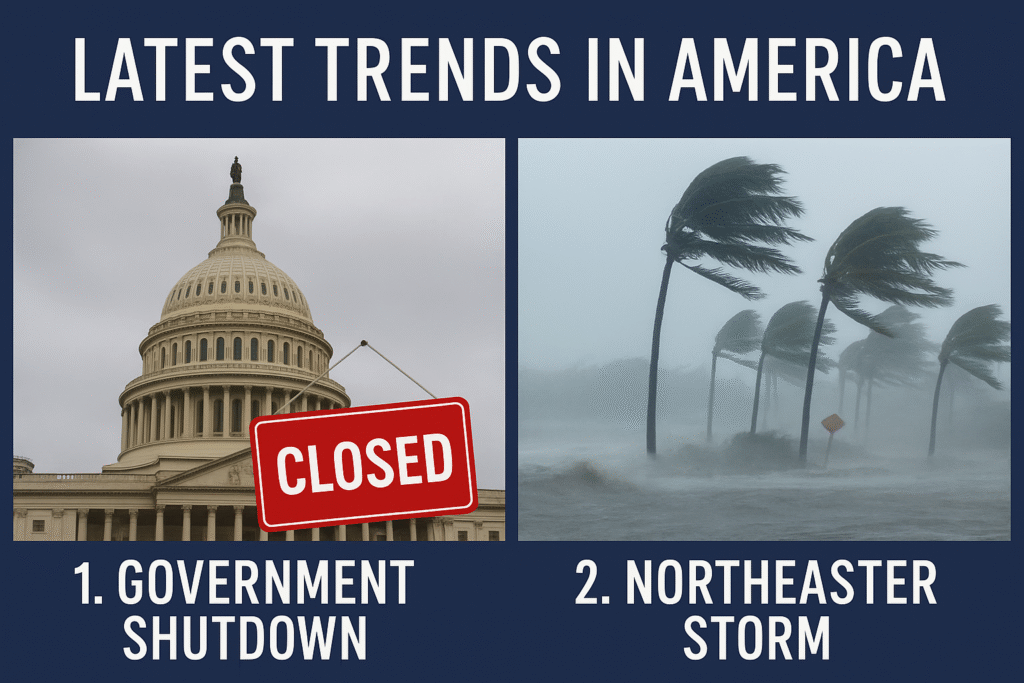
The shutdown stems from a deadlock between Congress and the White House over budget allocations and spending priorities. President Trump’s administration has insisted on major cuts to federal welfare programs and infrastructure spending, while opposition leaders in Congress argue that such cuts would hurt middle- and lower-income families.The political standoff has turned into a test of strength between two visions of America — one focused on austerity and fiscal conservatism, the other emphasizing social welfare and inclusivity.
Impact on Citizens
For ordinary citizens, the shutdown translates into longer lines, slower services, and uncertainty. Federal workers are either furloughed or working without pay. Social services such as passport processing, small business loans, and public assistance programs have slowed dramatically. National parks remain closed, and research projects at federal laboratories have been suspended.
According to recent reports, over 800,000 federal employees are directly affected, and millions more are indirectly impacted through contract delays and supply chain disruptions. The shutdown has also shaken public confidence in government institutions, as political polarization continues to deepen.
Economic Consequences
The shutdown is estimated to cost the U.S. economy billions of dollars in lost productivity. Small businesses dependent on government contracts are struggling to stay afloat. Economists warn that if the deadlock continues, it could shave off as much as 0.3% of GDP growth in the final quarter of 2025.Financial markets have shown signs of volatility as investors weigh the potential long-term damage. Consumer confidence, which had been recovering post-pandemic, is again showing signs of decline.Public Opinion and OutlookPublic frustration is rising. Polls indicate that a majority of Americans blame both political parties for the impasse, urging leaders to prioritize compromise over confrontation. The White House, however, remains firm on its stance, promising that the shutdown will “lead to a leaner, more efficient government.”While negotiations continue, there’s no clear end in sight. The coming weeks will determine whether Washington can overcome partisanship and restore the faith of millions who depend on the smooth functioning of their government.
About the Author

Wow
It’s true